
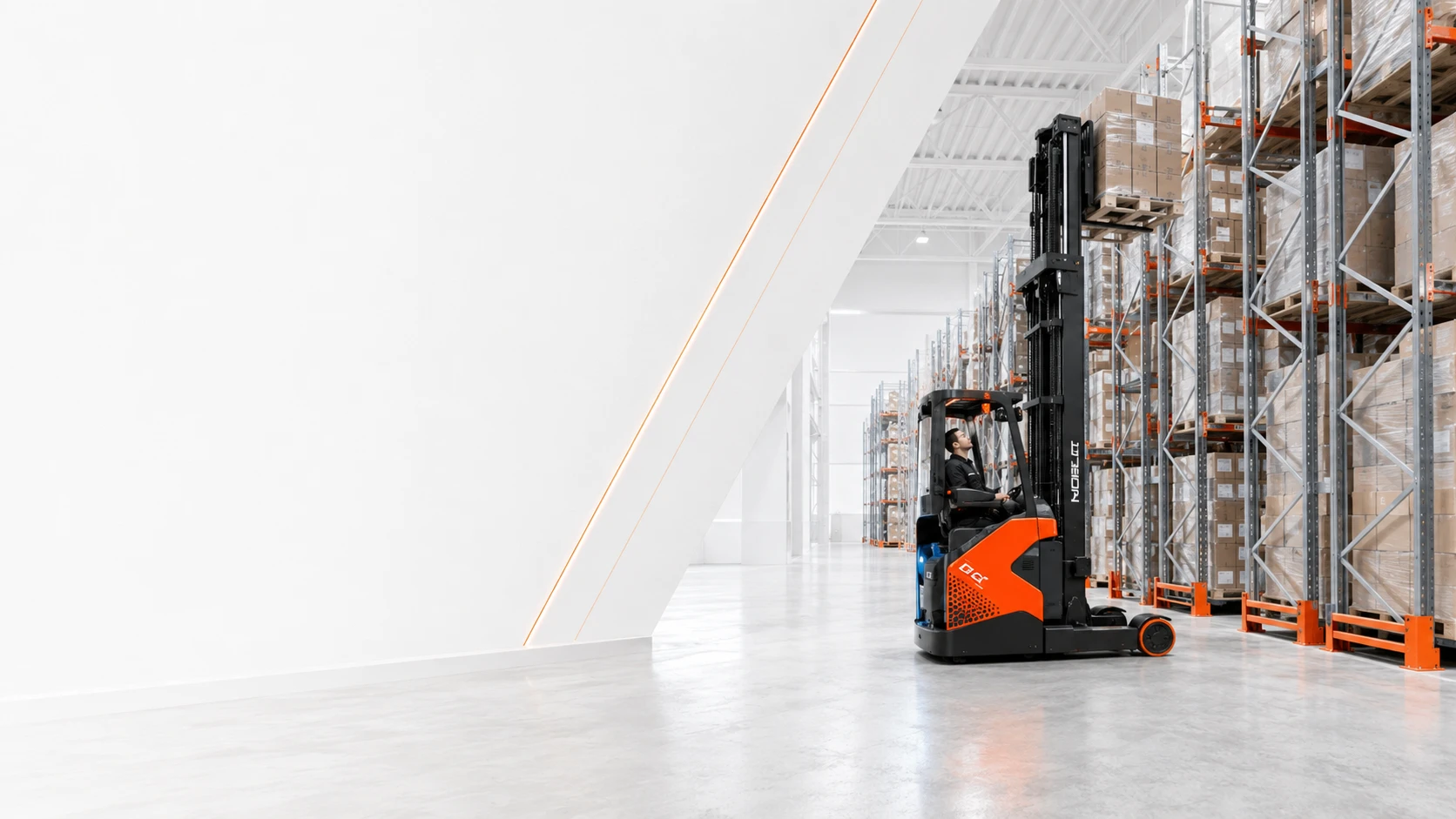
Choosing a counterbalance forklift is one of the biggest equipment decisions for an Australian warehouse, factory or distribution site. The right truck keeps loading, stacking and yard work moving. The wrong power source or capacity creates daily friction.
This guide explains how counterbalance forklifts work, when electric, LPG or diesel makes sense, and which questions to ask before you buy. It is written for business owners and operations managers who want a practical framework — not a hard sell.
What is a counterbalance forklift?
A counterbalance forklift uses a rear counterweight to balance loads on the front forks. That layout is why these trucks are so common for moving and stacking pallets, loading vehicles and general industrial handling.
Unlike a reach truck, a typical counterbalance forklift does not extend forks into racking with a pantograph. It is a versatile all-rounder for docks, floors and many outdoor areas — provided the site suits the power source you choose.
See Noblelift’s current Australian overview on the counterbalance forklifts page.
Start with the job, not the power source
Before comparing fuels, write down the work the truck will do most days:
- Typical load weight and load centre — ratings are usually quoted at a stated load centre (often 500 mm or 600 mm).
- Maximum lift height — racking, truck decks and overhead clearances.
- Travel distances and duty cycle — short dock work differs from full-shift yard runs.
- Aisle width and turning space — compact three-wheel electrics help in tighter indoor layouts.
- Floor and ground conditions — sealed floors, mixed surfaces, ramps and yards.
- Indoor air quality and noise — enclosed spaces usually favour electric.
- Support pathway — in Australia, Noblelift sales, hire/rental where available, servicing and parts are supported through authorised dealers.
If you are unsure, contact Noblelift Australia and ask to be connected with a local authorised dealer.
Electric counterbalance forklifts
Electric models — including modern lithium trucks — suit many indoor warehouses and mixed sites where exhaust at the truck needs to stay low.
Usually a good fit when: work is mostly indoor; quieter operation helps; you want lower emissions at the truck; and charging can be planned into the shift.
Published Noblelift examples
- FEP20-50NP — lithium electric, 2.0–5.0 tonnes, lift heights from 3,000 mm to 6,500 mm, 80V lithium-ion with CATL battery options listed on the product page.
- FE3D16-20N1 — three-wheel lithium electric in 1.6 / 1.8 / 2.0 tonne capacities, lift height up to 6,500 mm, turning radius 1,620 mm. Selected configurations can be discussed for freezer/cold-storage customisation where needed.
- A Series CPD15-100L — lithium counterbalance range with published capacities from 1.5 to 10.0 tonnes and mast heights up to 7,000 mm.
Practical checks: charging windows; multi-shift opportunity charging; tyre choice for your floors; and outdoor/wet-weather suitability (IP ratings and tyres via your dealer).
LPG counterbalance forklifts
LPG remains popular where businesses want internal combustion performance with more flexibility than diesel for mixed environments.
Often fits when: work is mixed indoor/outdoor (subject to ventilation and WHS rules); refuelling is simpler than battery planning; and the site already handles LPG supply.
The CPCD20-100L A Series is Noblelift Australia’s LPG and diesel counterbalance range, with capacities from 2.0 to 10.0 tonnes and mast heights up to 6,500 mm. (IC models in Australia start from 2.0 t.) Confirm fuel type, engine option and emissions configuration for your state and site.
Diesel counterbalance forklifts
Diesel is commonly considered for outdoor yards and heavier industrial work where charging infrastructure is limited and indoor exhaust is not the main constraint.
Often considered when: work is primarily outdoor or well ventilated; loads and outdoor runs are heavier; and diesel fuel is already on site.
Use the same CPCD20-100L product page as a starting point, then verify the exact diesel configuration with an authorised dealer.
Electric vs LPG vs diesel
| Factor | Electric (incl. lithium) | LPG | Diesel |
|---|---|---|---|
| Best starting point | Indoor / low-emission sites | Mixed environments | Outdoor / industrial yards |
| Exhaust at the truck | None during use | Needs ventilation assessment | Needs outdoor/ventilated assessment |
| Energy logistics | Charging plan | Bottle or bulk gas | On-site diesel |
| Typical noise | Quieter | Engine noise | Engine noise |
This table is a planning aid only. Site conditions and WHS rules should decide the final choice.
Capacity, lift height and aisle space
Power source is only one decision. Also match:
- Capacity — leave margin above your heaviest regular load.
- Lift height — include free-lift and overhead clearance.
- Working aisle — three-wheel electrics such as the FE3D16-20N1 can help in tighter indoor aisles.
- Attachments — side shift and other attachments affect residual capacity.
Compare published capacity and lift-height bands on the forklifts category page before requesting a detailed quote.
Buying and support in Australia
Noblelift Material Handling Australia works through an authorised dealer network for sales advice, hire/rental where available, servicing and parts. Start with service and support or find a dealer.
For general purchasing pathways, see ways to buy. Finance, if required, is arranged through partners — confirm terms with the dealer or finance partner rather than assuming a particular offer.
A short shortlist process
- Define load, lift height, aisle width and indoor/outdoor split.
- Shortlist electric, LPG or diesel based on site conditions.
- Compare two or three published models in the right capacity band.
- Ask an authorised dealer to confirm residual capacity with your mast and attachments.
- Agree service, warranty pathway and parts support before you order.
FAQ
What is the main advantage of an electric counterbalance forklift?
Electric models produce no exhaust emissions at the truck during use, which suits many indoor warehouses. Lithium options can also simplify charging and battery maintenance compared with traditional lead-acid systems, depending on the model.
Is LPG better than diesel for warehouse work?
Not automatically. LPG can be more flexible for mixed indoor/outdoor use where ventilation allows it. Diesel is often preferred outdoors and for heavier industrial applications. Site rules and duty cycle should lead.
How do I know what capacity I need?
Start with your heaviest regular load and its load centre, then add a practical margin. Confirm residual capacity once mast height and attachments are included.
Can Noblelift help me choose between models?
Yes. Use the contact page or call 1300 988 556. Noblelift can help with product guidance and connect you with an authorised local dealer for sales, service and parts support.
Next step
Review the current counterbalance forklift range, then contact Noblelift Australia with your loads, lift height and operating environment. An authorised dealer can help finalise the right configuration and support pathway.